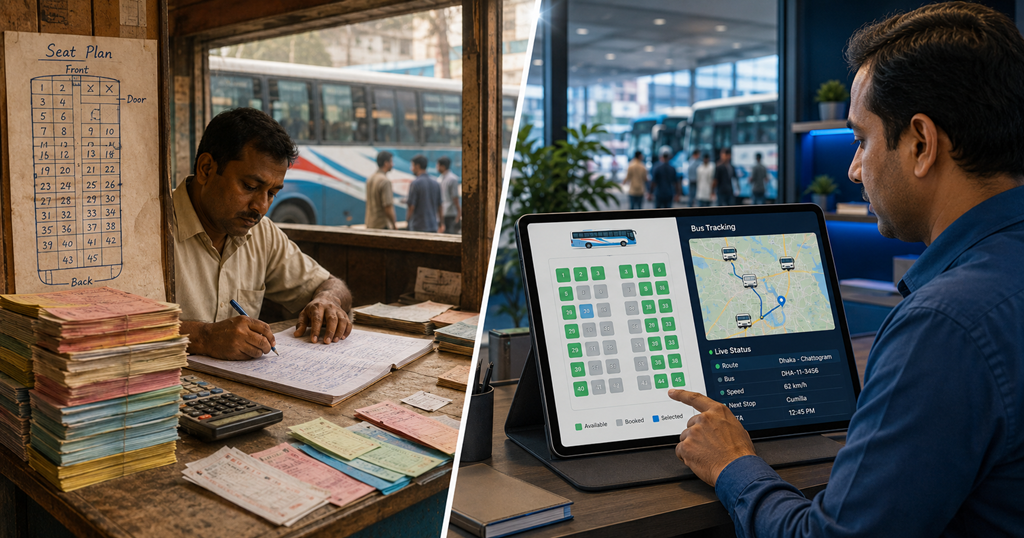
Walk into almost any bus counter outside Dhaka's biggest operators, and you'll still see the same thing: a stack of paper tickets, a hand-written seat chart, and a counter staff member juggling phone bookings with a pen. In 2026, with ride-hailing apps and food delivery fully mainstream in Bangladesh, bus ticketing for a huge share of operators hasn't caught up. Here's why, and what's changing it.
Existing Platforms Weren't Built for Operators
Most digital ticketing platforms in Bangladesh, like Shohoz and BD Ticket, are built as customer-facing marketplaces. They help passengers book seats, but they don't give operators real tools to manage their fleet, staff, schedules, or day-to-day operations. Operators get a booking channel, not a management system.
Small and Mid-Size Operators Can't Justify Custom Software
Building an in-house digital system has historically meant hiring developers, maintaining servers, and ongoing costs most small and mid-size operators simply can't absorb. Paper is free, familiar, and doesn't require training, even if it costs more in the long run through lost seats, double bookings, and no real-time visibility.
Trust in Cash-Based, Manual Processes Runs Deep
For operators who've run their business the same way for 10-20 years, manual processes feel safer, even when they lead to overbooking, no-shows, or disputes at the counter. Change requires a system that's easy enough to trust on day one.
No Real-Time Fleet Visibility
Paper-based operations mean owners often don't know where a bus is, whether it left on time, or how occupancy looks across routes until problems have already happened. Without digital fleet tracking, decisions are reactive instead of proactive.
Fragmented Systems Instead of One Ecosystem
Some operators have tried piecing together a booking app, a separate spreadsheet for fleet tracking, and manual accounting, but fragmented tools create more work, not less, and rarely talk to each other.
What Operators Actually Need: A Full Operational Ecosystem
This is exactly the gap Ticket Katbo was built to close. It combines real-time seat booking, fleet and schedule management, staff coordination, and reporting in one multi-tenant platform, built specifically for the way Bangladeshi transport businesses actually operate.
Unlike marketplace-style platforms, Ticket Katbo gives operators direct ownership and control of their own booking channel, pricing, and data, while still delivering the same convenience passengers expect from apps like Shohoz.
Take the Next Step for Your Business
Ready to modernize your operations? See how Ticket Katbo works: Ticket Management System.
Need a custom solution for your transport business? Octosync builds and manages the full technology stack for bus and fleet operators across Bangladesh. Get a free consultation with the Octosync team today.